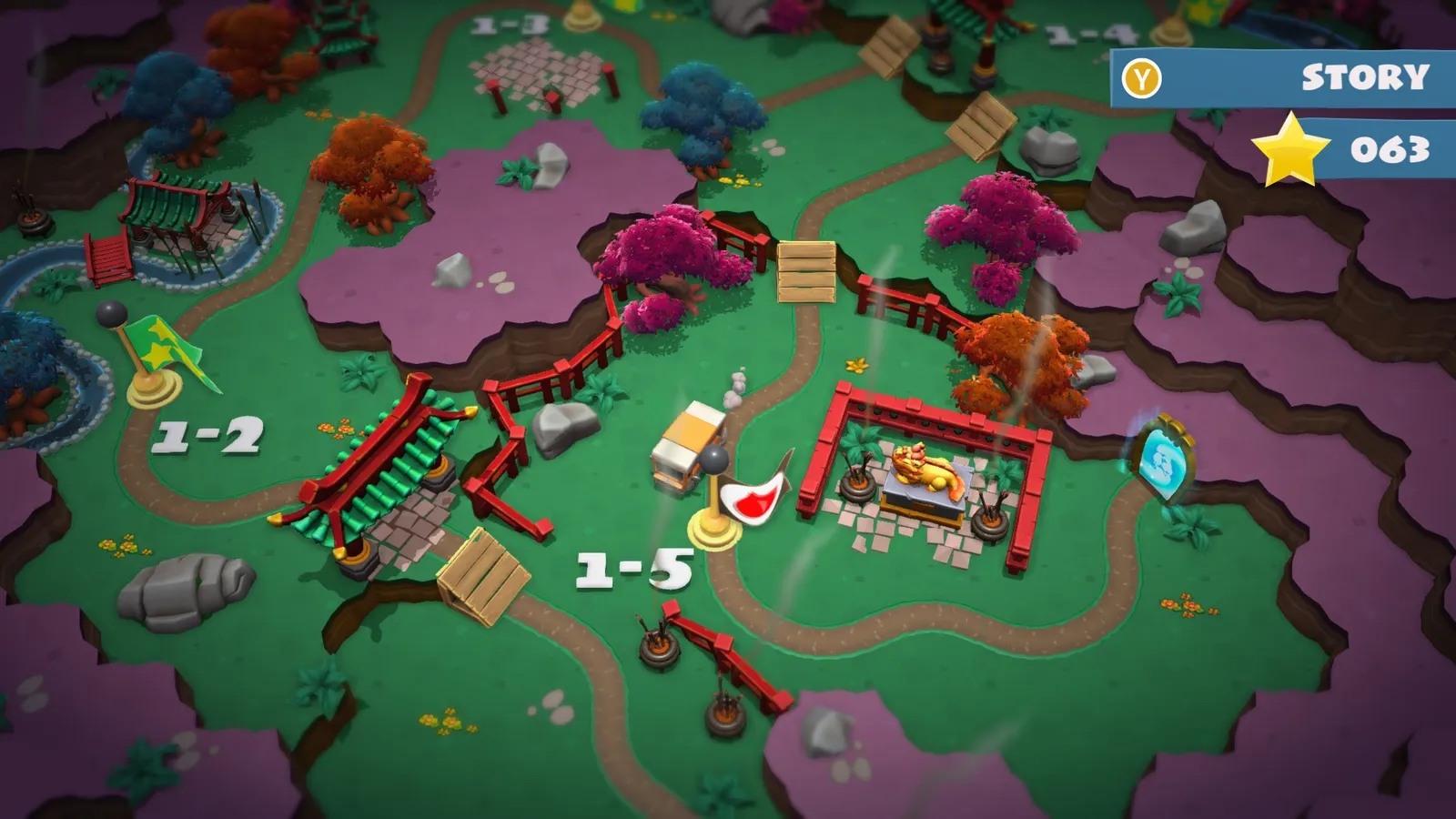
Chopping an onion is easy. Getting it into the right pot while someone needs a clean plate and your teammate blocks the only passage is where Overcooked! gets interesting. The individual jobs make sense. Fitting them together is the challenge.
The original game, released in 2016, builds its best moments around that gap. A team can know exactly what a recipe needs and still fall apart because two people go for the same ingredient. Then, on the next attempt, a small change in who does what makes the whole kitchen run better. That feeling of getting better together is why it still deserves a place in the couch co-op conversation.
Simple controls, difficult teamwork
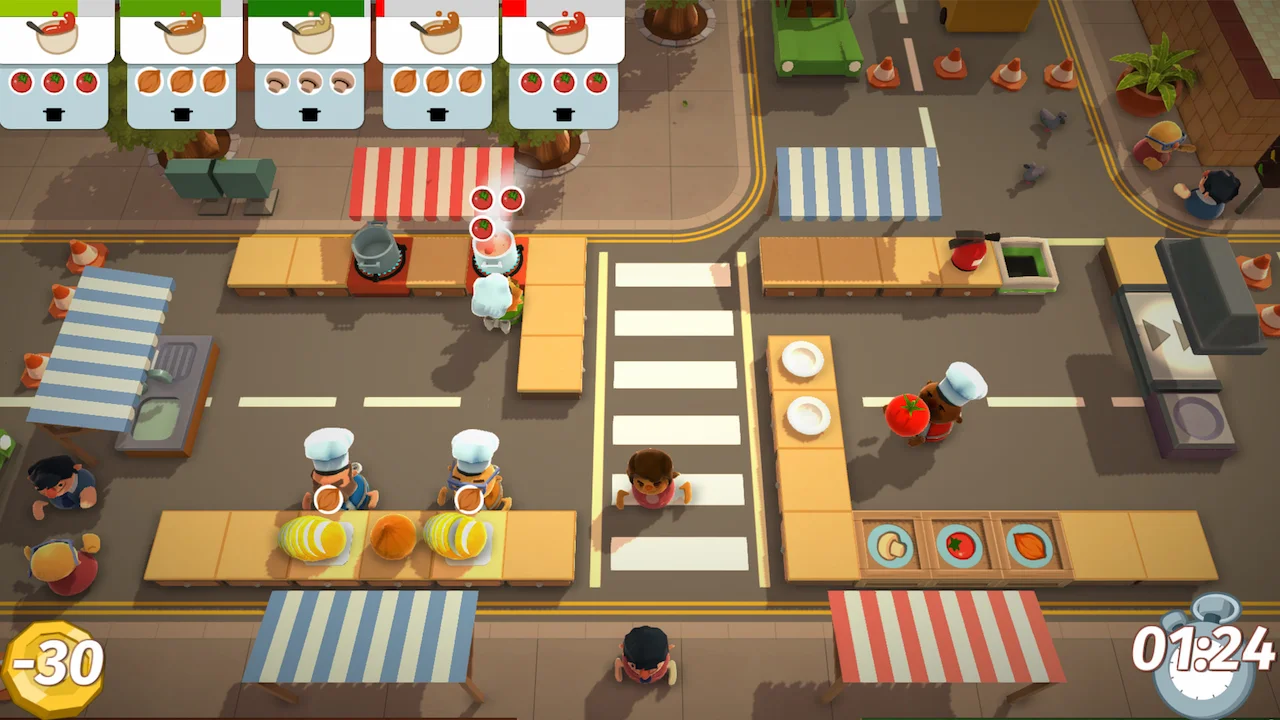
Most of the work involves carrying ingredients, chopping, cooking, serving and washing up. You can explain those jobs without a long tutorial. What takes practice is noticing which one matters most right now.
Chopping more tomatoes feels productive until you realise nobody has washed a plate. Rushing to help at the hob can make things worse if it means squeezing past the chef who is trying to serve. Being busy and being useful are different things, and the game keeps finding ways to expose that difference.
Movement and timing still matter, especially when chasing a better score. But a fast player cannot solve every problem alone. Someone has to keep track of the orders, leave space for other chefs and notice the task the rest of the group has forgotten. A well-timed clean plate can be as valuable as another finished dish.
The kitchen keeps changing your plan
Once the group has a routine, the level design gives it something new to deal with. Kitchens on moving trucks or slippery ice make a familiar recipe awkward again. You still understand the job; the route between its steps has become the problem.
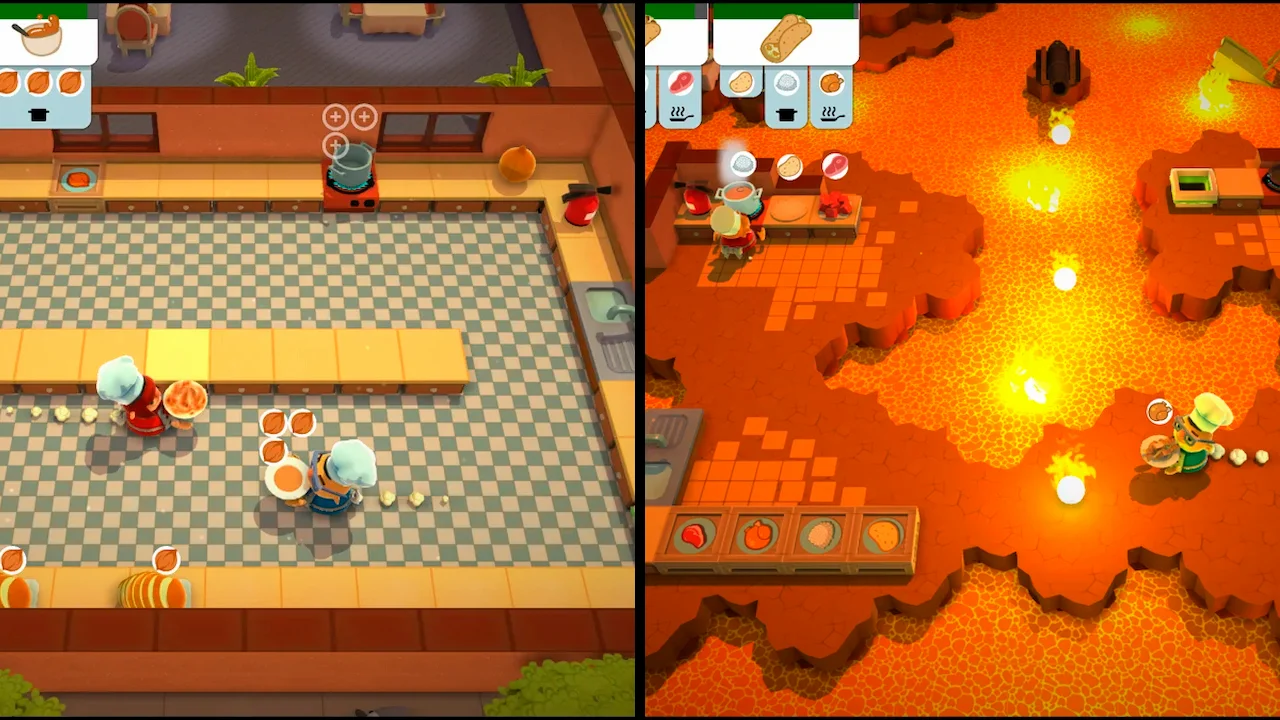
That is a big part of the original's appeal. A cramped layout might reward staying at one station and passing ingredients across a counter. Another asks you to move between jobs as the kitchen changes. The useful question is rarely just “How do I cook this?” It is “How do we get this order through this particular mess?”
Overcooked! 2 adds ingredient throwing, which changes how teams can move food around. The original's more limited toolset makes the route you take, and where you leave an ingredient, especially important. It is a different rhythm, rather than a reason to dismiss the sequel's additions.
Why coordination matters more than shouting
Overcooked! has a reputation for noisy sessions, but more talking does not automatically mean better teamwork. Four people calling out different emergencies can make a kitchen harder to follow.
A short, useful message helps more: “I'll wash up”, “Leave the onions here” or “I'm taking that order.” Once roles are clear, some of the work needs no commentary at all. Putting chopped ingredients in a consistent spot lets a teammate see what is ready without asking.
If a level keeps going wrong, it helps to change one part of the plan before trying again:
- Decide who will handle plates and serving, rather than assuming somebody will.
- Choose a place to leave prepared ingredients so they do not block a workstation.
- Divide up cramped areas to avoid everyone crossing the kitchen for the same job.
- Agree when to swap roles, especially if someone is stuck with a task they find frustrating.
The satisfying run is the one where you start anticipating each other. You put down a plate just as your teammate needs it, or take over a pan before they have to ask. The score matters, but that shared understanding is often the better reward.
When the chaos stops being fun
The same dependence on each other can also make the game uncomfortable. A missed order affects the whole team, and a more experienced player can easily slip into directing everyone else's turn. Being told what to do for an entire level is not much of a co-op experience.
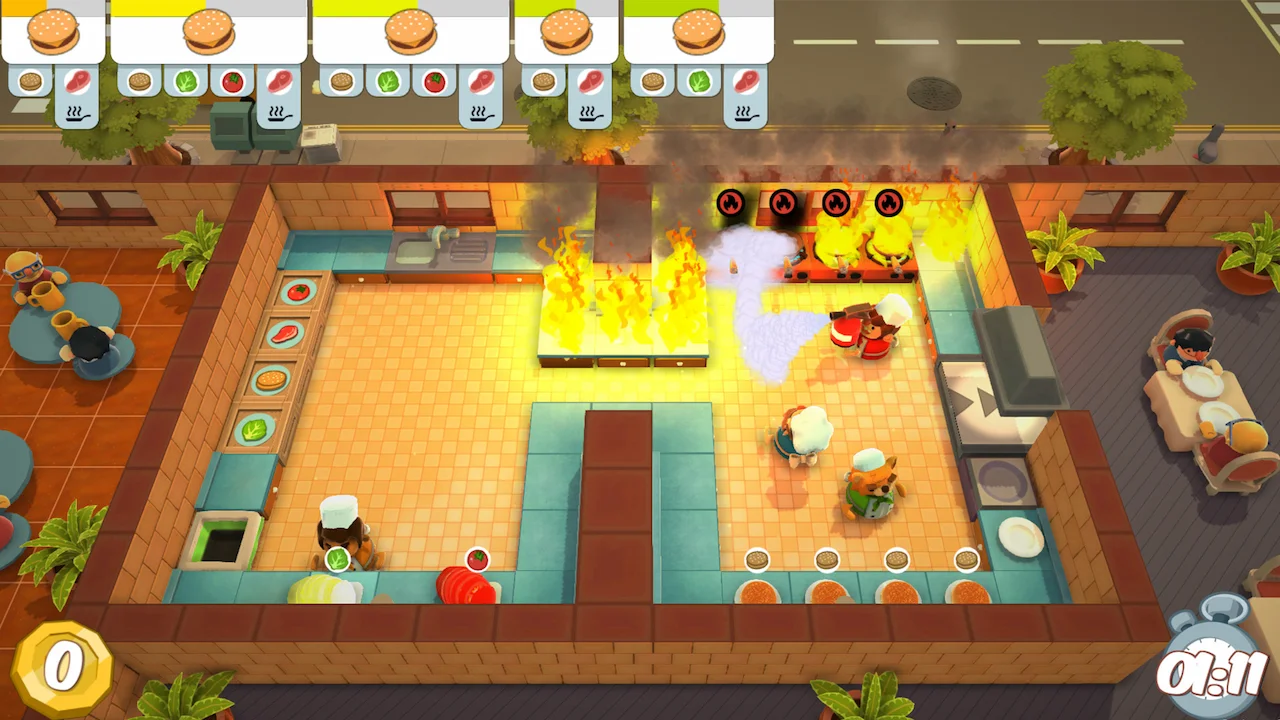
It helps to agree what sort of session you want. Trying to improve a score and laughing through a messy first attempt are both valid, but they create different expectations. Rotate jobs, give people room to learn, and take a break if another retry is turning into an argument.
This is not an automatic recommendation for a relaxing evening. If timers, crowded spaces or repeated mistakes make someone miserable, the cute chefs will not fix that. The game works best when the whole group enjoys recovering from a plan going wrong.
Is the original Overcooked! right for your group?
The original supports up to four players locally and can also be played solo, but it does not have native online multiplayer. For a group sharing a screen and happy to retry a difficult kitchen, its compact tasks and demanding teamwork remain a strong combination.
If you want the original's kitchens with online play, Overcooked! All You Can Eat includes remastered versions of both games, cross-platform online multiplayer and an Assist Mode. Those assists are worth considering if the standard pace is a barrier for your group. They belong to that edition, not the 2016 original.
If arranging the kitchen sounds more appealing than adapting to a fixed layout, PlateUp! gives restaurant planning a much bigger role. That makes it a useful comparison, not a promise of an easier evening. Our collection of co-op cooking games offers more options if neither approach fits.
Overcooked! earns the “masterpiece” label through moments that only happen because you are playing together: the badly timed collision, the rescued order, the retry where everyone finally clicks. Its chaos is memorable. Learning to handle it as a team is what makes it worth coming back to.