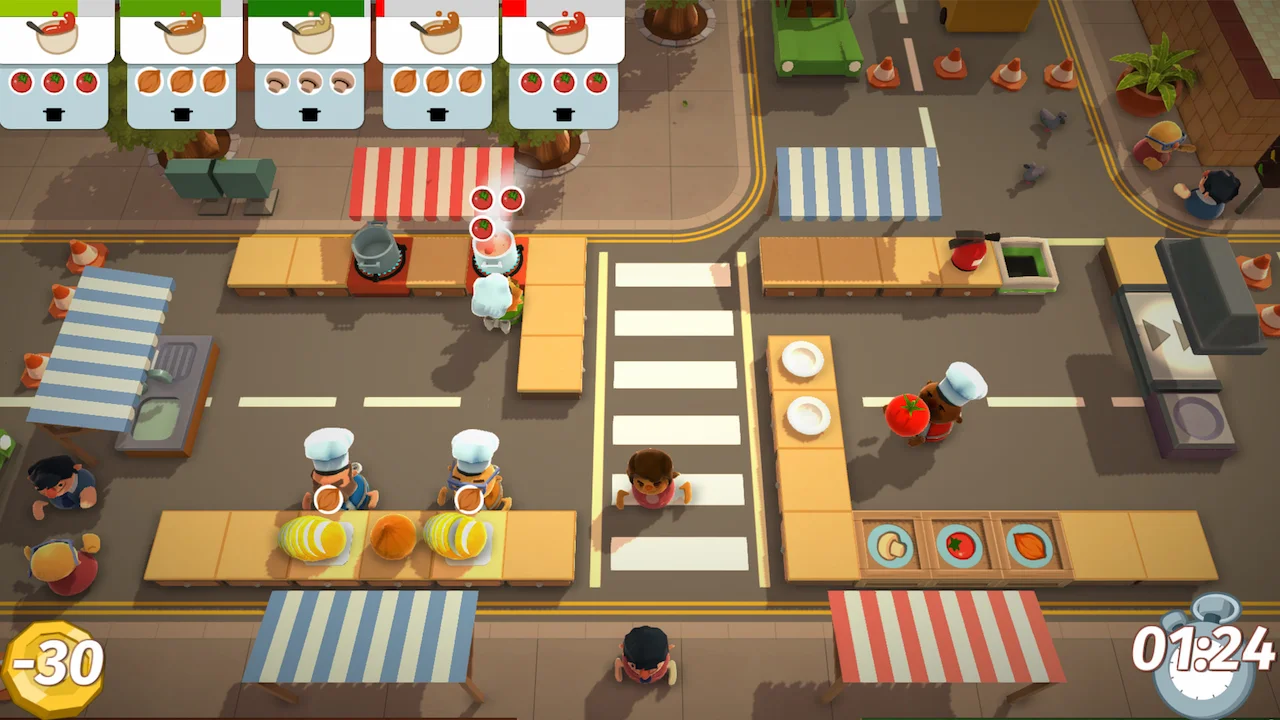
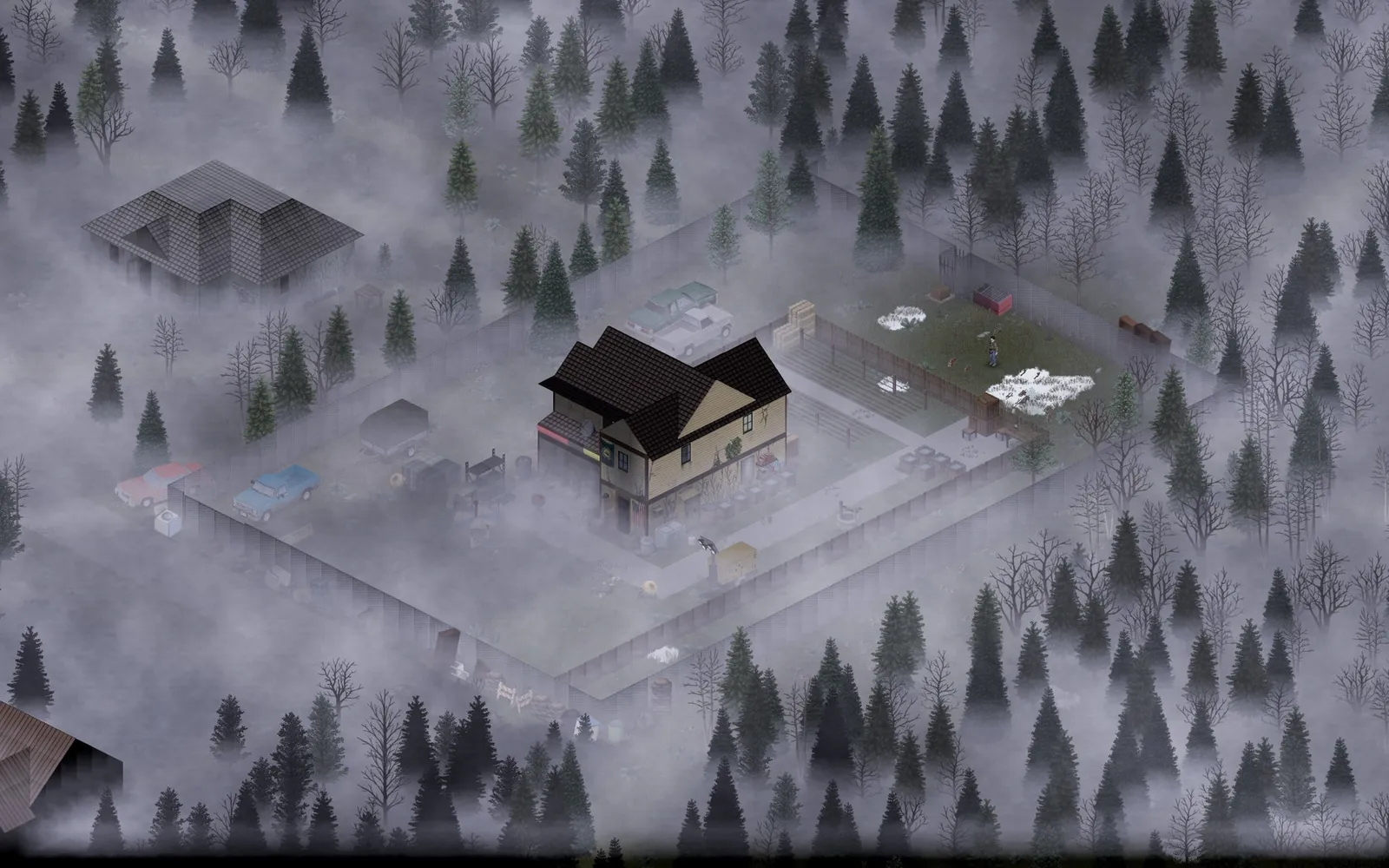
A plate is ready, but neither of you can reach the serving counter. In Overcooked! 2, you might need to wait for a moving platform or pass ingredients across a gap. In PlateUp!, that bottleneck might be a reason to move the furniture before tomorrow's service. Both turn cooking into a shared juggling act, but they give you different ways to solve the problem.
For a couple, the useful question is what you enjoy working on together: learning a kitchen's rhythm over repeated attempts, or building a restaurant whose layout and routines evolve with you.
A campaign to dip into or a restaurant to return to?
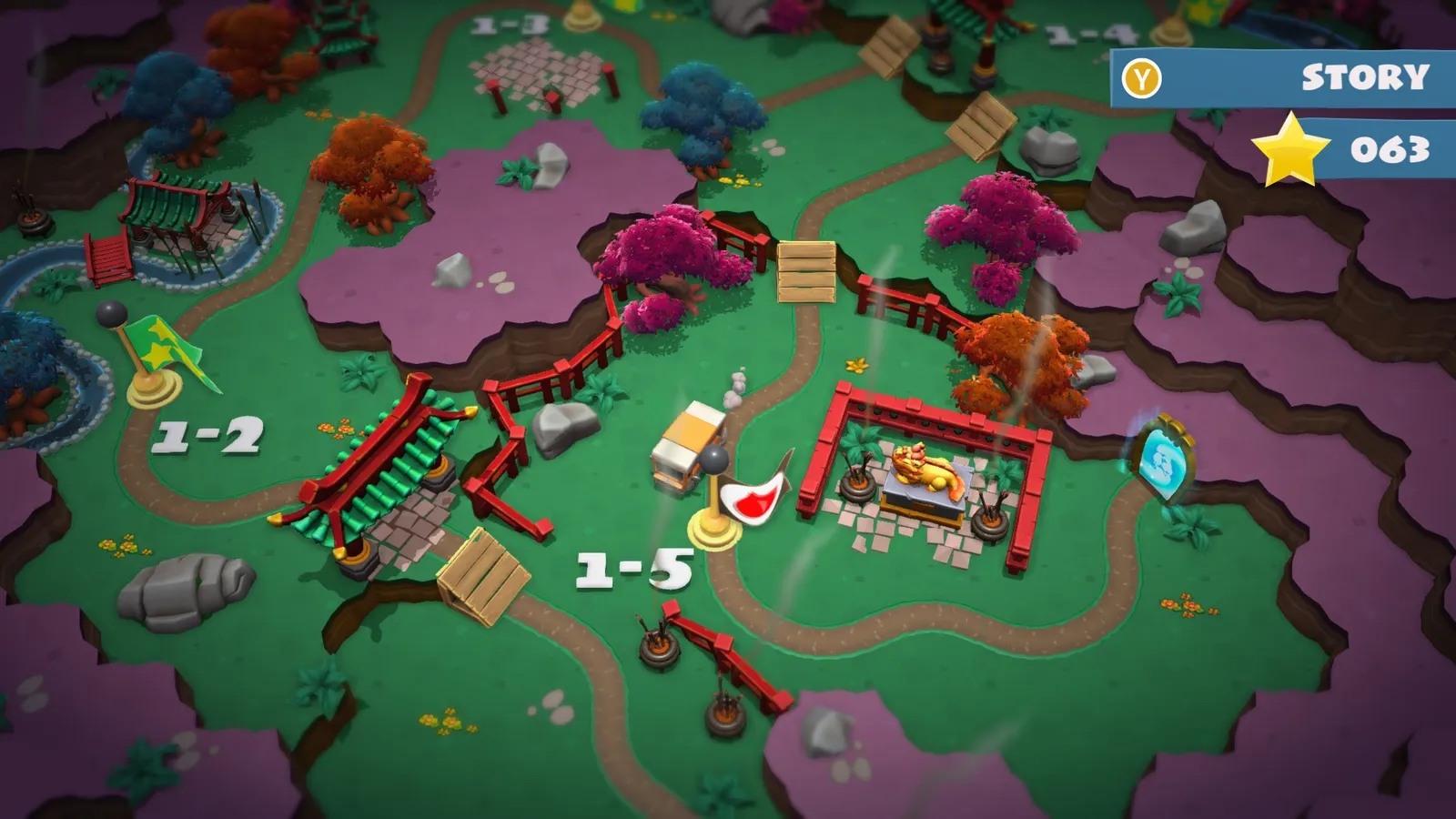
Overcooked! 2 divides its campaign into individual kitchens. Each round gives you a score and a star rating, so you have a clear stopping point: finish a level, try to improve it or leave the next kitchen for another evening. Pursuing a better score can become a shared project in itself, especially when a small change in who chops, cooks or delivers makes a familiar level flow more smoothly.
PlateUp! builds an ongoing run around a restaurant. You prepare the space, serve customers, then spend your earnings and rearrange equipment before the next day. Completing day 15 opens up franchising, while the current restaurant can continue into overtime. Franchising lets you carry selected cards into a later restaurant; it does not mean keeping the entire fitted-out kitchen.
You can save and resume a PlateUp! run, so the restaurant need not fit into one sitting. Use the save/quit option when you want a break; abandoning the restaurant ends the attempt. The difference is how you pick things up again: Overcooked! 2 asks you to tackle a level, while PlateUp! asks you to remember the restaurant you have been building.
What a bad service costs you
In Overcooked! 2, a messy round mainly threatens your score. Repeating a kitchen does not undo the campaign stages you have already cleared. That makes it a good fit if you enjoy experimenting with a different division of labour, then comparing the result. The timer and shifting kitchens can still feel demanding; a small penalty for failure does not make the cooking itself calm.
With PlateUp!'s standard rules, more is at stake. Once you are past the first three days, which allow retries, running out of customer patience can close the restaurant and end the run. Longer-term progression survives, including unlocks earned through experience. Losing a restaurant you have carefully arranged can nevertheless sting more than missing a score target.
PlateUp! also offers optional Chill cards on all platforms. Friendly Faces doubles customer patience and reduces customer numbers; Purrvana prevents the restaurant from closing. You can unlock these cards by beating a run with a given dish or enable them for every dish in the settings. If you enjoy planning a restaurant but dislike losing it after a bad service, these options can make PlateUp! a better fit.
Under those standard rules, consider which retry sounds appealing. Would you rather return to a familiar challenge and improve your execution, or start another restaurant with a better idea of what to build? PlateUp!'s setbacks suit players who enjoy applying a lesson to a fresh setup. Overcooked! 2 makes it easier to concentrate on mastering one specific kitchen.
Adapting to a kitchen or designing one
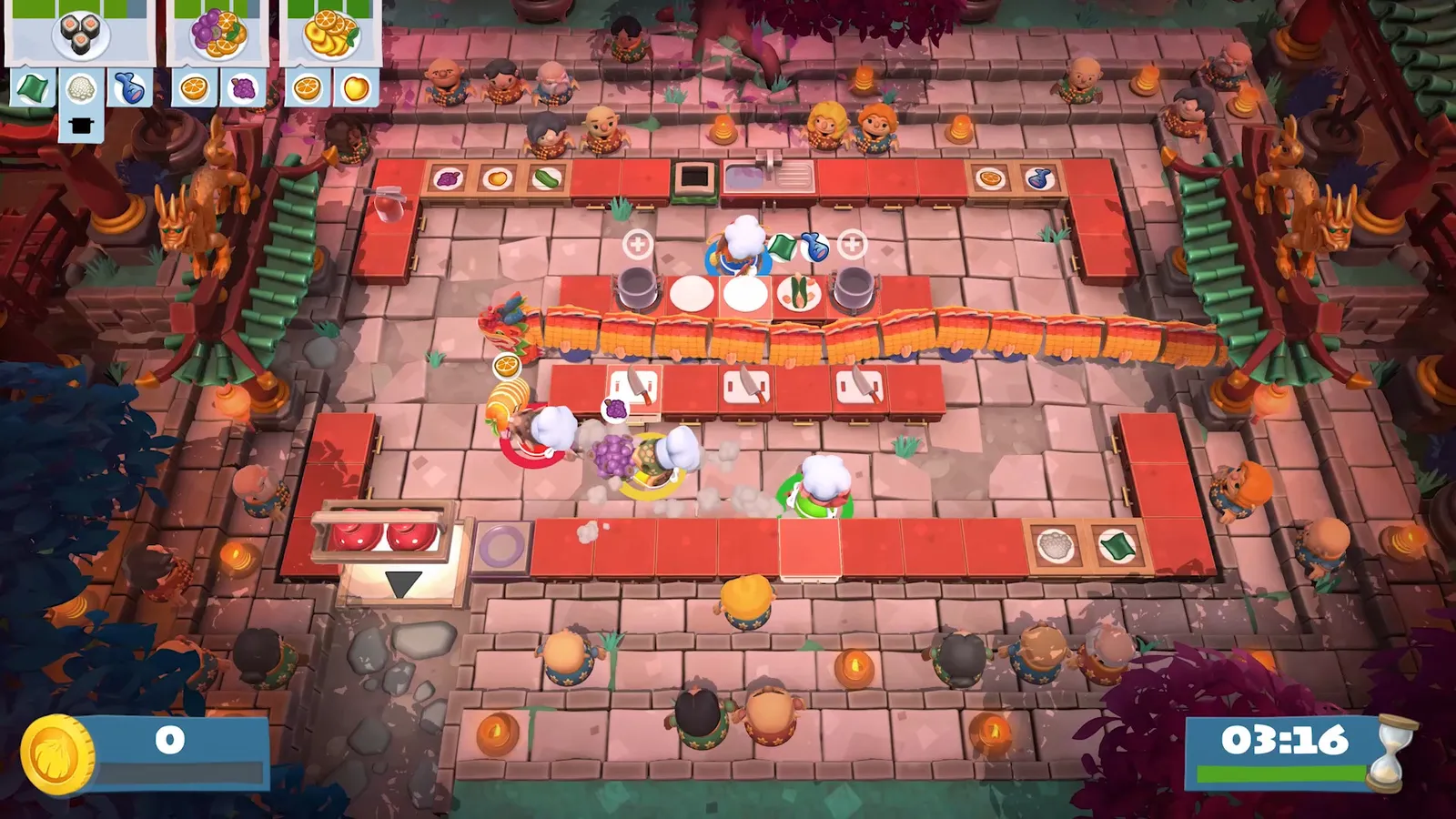
Overcooked! 2 supplies the obstacles: moving platforms, portals and layouts that change during service. Throwing ingredients can save a journey, but only if someone is ready to use them. With two players, a useful starting point is to divide the kitchen by access: one handles the ingredients and chopping boards on their side, while the other cooks and serves. When the layout shifts, the handover point may need to change too.
PlateUp! lets you change much more between services. You choose where appliances and tables go, decide what to buy and can eventually connect equipment to automate parts of the work. The appeal is seeing a design decision pay off while you play. Moving a sink or creating a clear route from kitchen to tables can be more valuable than trying to move faster through a cramped room.
Before investing in an elaborate automation chain, follow one order through your restaurant: preparation, cooking, serving and the return of dirty plates. Where does one player wait for the other? Improving that handover gives you a concrete problem to solve together. PlateUp!'s practice mode lets you try dishes and equipment before opening for service.
Sharing the work when there are only two of you
Both games reward a division of labour that leaves room to help. In Overcooked! 2, two chefs chasing the same ingredient can leave a pan unattended. Give each other a starting responsibility, then use specific calls such as “two chopped tomatoes” or “I have the plates” to make the next handover clear. The useful information is what your partner needs to do next.
In PlateUp!, cooking and serving are a natural starting split, but the dining room includes taking orders, clearing tables and managing dirty dishes. If the cook finishes early while the server falls behind, the restaurant may need a different arrangement or a shared washing-up task. Between days, both players have useful evidence: the cook knows where preparation stalls, and the server knows which journeys take too long.
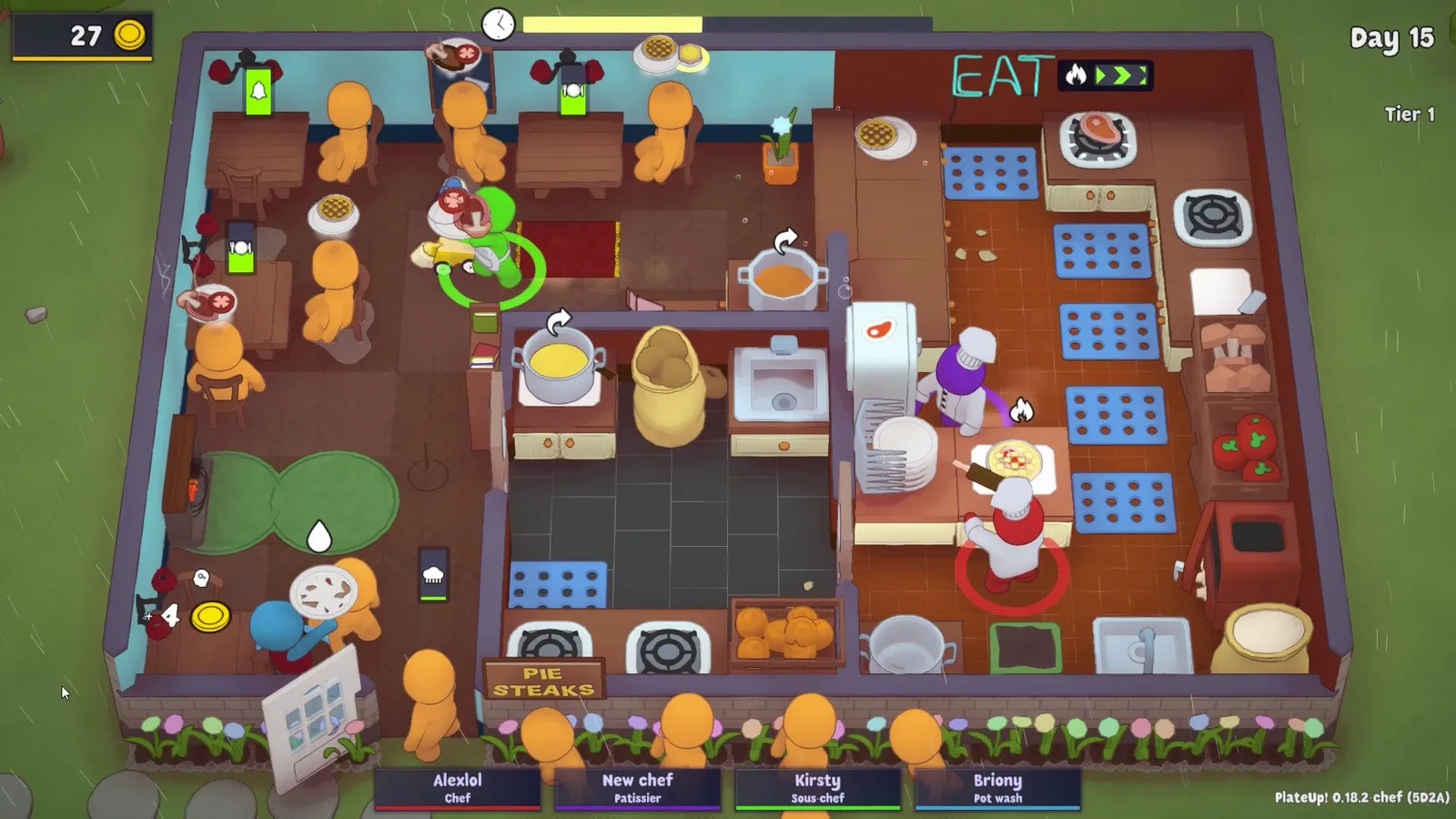
If one of you likes planning more, that can work well in PlateUp!, provided the plan still makes sense to the person using it. Walk through any changed layout together before opening. Overcooked! 2 gives you less furniture to discuss, but there is still plenty of strategy in deciding where each chef should stand and when to switch jobs.
Playing together and choosing the right edition
Both games support two-player local and online co-op, with up to four players in total. For online play, check the platform combination as well as the title:
- Overcooked! 2: crossplay is limited to supported computer versions, rather than PC-to-console play. Steam players joining friends on Epic need the crossplay branch and the in-game Team17 invitation system; Team17's crossplay instructions explain the setup.
- PlateUp!: Steam has a PC-crossplay option in the multiplayer menu for other PC versions such as Windows Store. That option does not connect Steam players to console players.
For an Overcooked adventure with adjustable pressure, consider Overcooked! All You Can Eat. This separate remastered collection includes an Assist Mode with options such as longer timers and level skipping, plus accessibility settings including dyslexia-friendly text. Those are features of All You Can Eat, not the standalone Overcooked! 2. It also supports cross-platform multiplayer, but everyone joining online needs All You Can Eat.
Which should you play as a couple?
Choose Overcooked! 2 if you want self-contained challenges, changing scenery and the satisfaction of turning a clumsy first attempt into a coordinated routine. It is the more straightforward fit when you want to select a kitchen and get cooking, with little setup between rounds.
Choose PlateUp! if designing the restaurant sounds as enjoyable as running it. Its strongest appeal is the connection between your decisions before service and what you do during it: a better layout, a useful purchase or a clearer handover can change how the whole team works.
Neither needs to be a stepping stone to the other. They occupy different corners of co-op cooking games: pick Overcooked! 2 for the pleasure of learning a challenge together, or PlateUp! for the pleasure of building and revising your own solution.