Your first breeding project in Palworld should solve a problem you can already see at the base. A Tombat can help with mining, a Beegarde can supply honey for more cakes, and a short breeding chain can produce a Lunaris for crafting. Choose the job first, then improve the offspring's passive skills. You do not need four perfect traits before a new worker becomes useful.
These combinations use Palworld's 1.0 breeding rules. The full release changed breeding results, so Early Access charts can lead to a different Pal. The pairs below describe normal offspring; the small chance of a mutated egg is a separate outcome, not something to build your first project around.
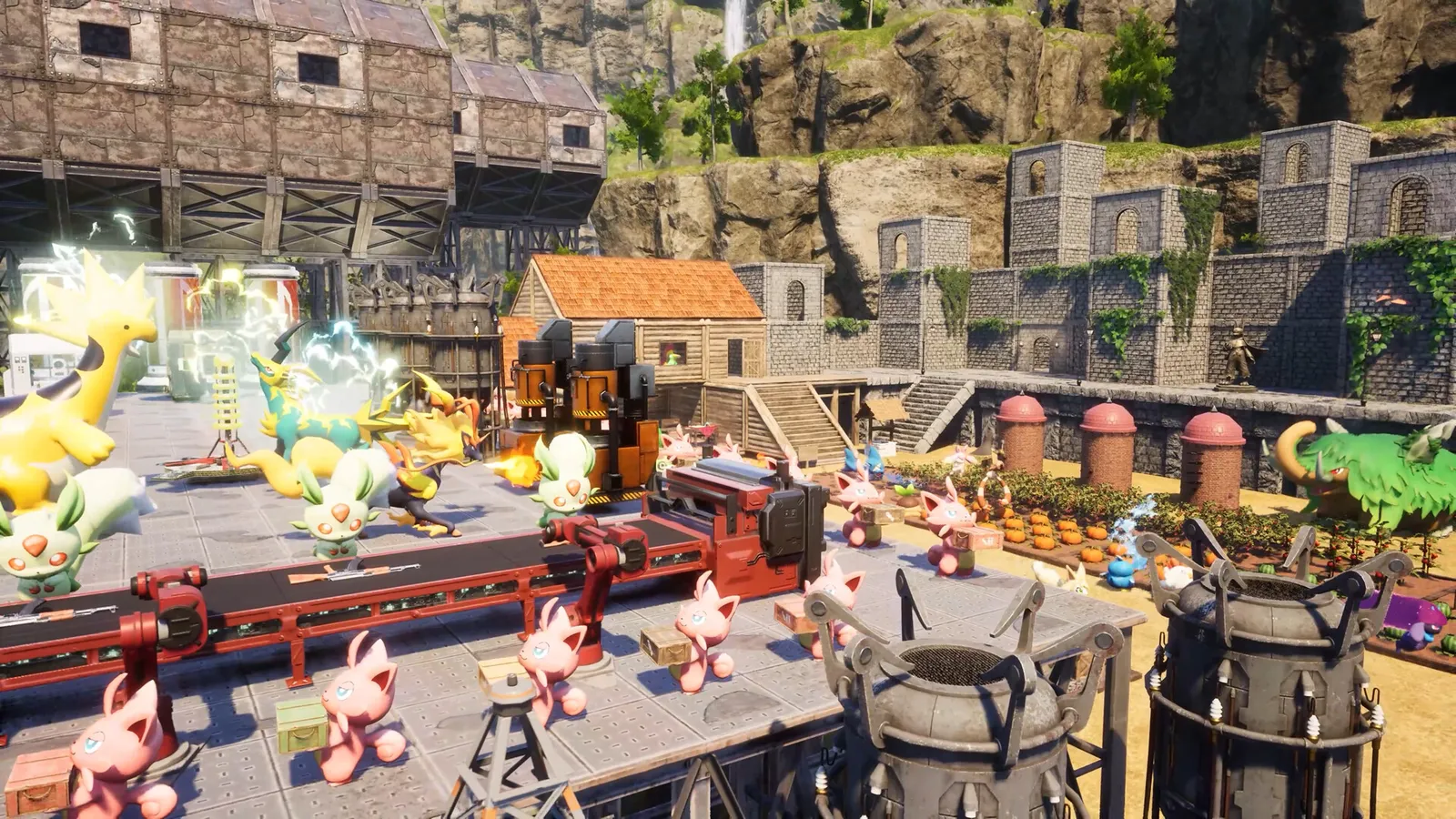
Early breeding combinations worth considering
Start with parents you already have. Every pair needs one male and one female; for these combinations, either species can be either sex. The work levels shown are the offspring's base suitability, before further upgrades.
| Parents | Offspring | Useful for |
|---|---|---|
| Caprity + Penking | Tombat | Mining Lv. 3 |
| Mimog + Pengullet | Beegarde | Honey at the Ranch |
| Pengullet + Sparkit | Pengullet Lux | Generating Electricity Lv. 2 |
Tombat is worth breeding if you want another miner and already have Caprity and Penking. Both Penking and Tombat have Mining Lv. 3. Choose this cross to add a worker or pass on useful traits. Penking has a level-15 Alpha encounter, but catching it is still part of the preparation. Tombat also appears in the wild at night: catch one directly if that takes less effort. Breeding becomes more attractive when the parents carry a passive you want to keep.
Beegarde helps sustain the next round of breeding. Assign it to the Ranch for honey. You still need honey from another source to make the first cake for this pair. Mimog can appear at low levels, but it is uncommon and flees quickly. Use this route if you have caught one, rather than making the whole group wait for a rare parent.
Pengullet Lux is an accessible project for your first powered facilities. Its two parents are early catches, and its electricity suitability gives it a clear role. If you have nothing to power yet, spend those ingredients on the worker your base needs now.
A two-step route to Lunaris
If you have a Mimog and want a stronger crafter, this chain reaches Lunaris, which has Handiwork Lv. 4:
- Breed Fuddler + Mimog → Univolt.
- Breed Univolt + Mimog → Lunaris.
Keep the original Mimog for the second step. The Univolt must be the opposite sex to that Mimog, so you may need to hatch more than one. If you are also moving a useful passive from Fuddler, check that the Univolt inherited it before continuing. Getting the right species does not confirm that the trait came with it.
For different parents, use PalDB's breeding calculator to check the exact pair and variant. Choose a route around the Pals in your boxes, including their sex and passives, rather than collecting every parent in a long recipe.
Set up the farm and a reliable cake supply
- Build a Breeding Farm. It unlocks at technology level 19 and costs 10 Wooden Boards, 20 Stone and 50 Fiber. Leave enough accessible space for the assigned Pals.
- Assign the parents. Put the chosen male and female to work at the farm and check that both are registered there. A Pal standing nearby is not necessarily assigned.
- Cook a Cake. A Cooking Pot, unlocked at level 17, needs a Fire Pal to cook. The basic recipe is 5 Flour, 8 Red Berries, 7 Milk, 8 Eggs and 2 Honey.
- Put the cake in the farm's chest. An ordinary breeding cycle consumes one basic Cake to produce one egg. Keeping cakes in your inventory or feeding them directly to a parent does not supply the farm.
- Move the egg to an Egg Incubator. The basic incubator unlocks at level 10. Check its temperature feedback and the world's incubation settings instead of assuming every egg will take the same time.
Chikipi and Mozzarina supply eggs and milk at the Ranch; Beegarde supplies honey. Grow Wheat and turn it into Flour at a Mill staffed by a Pal with Watering. Keep berries in stock too.
In a shared base, one player can prepare the next cakes while another checks catches for the missing parent or passive. That gives both players a concrete contribution without needing two farms immediately.
If incubation waits do not suit your sessions, the host or server administrator can adjust the world's incubation time, including setting it to zero. That changes the hatch wait; the parents still need to produce the egg and the farm still needs cake.
How to pass down passive skills
A Pal can have up to four passive skills. Offspring can inherit from the combined set of their parents' passives, and random traits can also appear. A trait found on both parents counts as one distinct option. With ordinary Cake, two good parents do not guarantee an egg carrying every trait you wanted.
Choose passives for the offspring's job. A valuable combat trait can be a poor fit for the worker you are trying to breed:
- Base work: Artisan gives +50% work speed and Serious gives +20%. They are useful goals for a crafter such as Lunaris.
- Combat: Ferocious gives +20% attack. Musclehead gives +30% attack but cuts work speed by 50%, so keep that trade-off away from a dedicated crafting line.
- Travel: Runner gives +20% movement speed. It is a straightforward target when improving a mount you already use.

Do not select parents just because they have more positive-looking traits. Each unwanted passive adds another option to the inheritance pool. A parent with only the trait you want, paired with a compatible parent with no passives, can be useful for building a breeding line. Random extras can still appear, so inspect each hatch.
A manageable first project
Suppose you have a Caprity with Artisan and a Penking with Serious, with no other passives on either. Here is a practical way to work towards a Tombat carrying both:
- Confirm the pair and its sex. Those species produce Tombat, but the two individuals still need to be male and female.
- Hatch and inspect. Keep a Tombat with both wanted passives. Also consider keeping offspring with one desired trait and no unwanted extras as future parents.
- Keep the useful breeders. Once you have suitable male and female Tombats, breeding the same species keeps the normal offspring as Tombat while you work on its passives.
- Stop at a useful result. A mining worker with a good passive can start helping now. Do not discard it just because it has fewer than four.
Splitting four desired traits two-and-two between parents is one way to organise a project, not a guaranteed inheritance trick. The important part is keeping the combined pool focused. You can spread the desired traits differently; extra unwanted ones remain extra options.
Know when another egg is worth the cake
Breeding is no longer the only way to change a Pal's passives. The Pal Surgery Table unlocks at level 38 and can change sex or replace passives using its available procedures and implants. Check what you can actually perform there before spending a long session trying to fix one unwanted trait.
The 1.0 update also added Special Cake to improve inheritance of multiple parental passives. Its crafting technology is level 74, so it is not a requirement for your first farm. Start with ordinary Cake and one or two useful traits; save elaborate combinations for when you enjoy the process and can afford the ingredients.
For a group that enjoys building and running a base together, agree which Pals are breeding stock before anyone condenses or sells spare catches. Choose one worker the whole base will benefit from, put the first useful offspring to work, and let the next batch run while you return to exploring.