Yes, Deep Rock Galactic is worth playing as a regular duo. You do not need to recruit two strangers to make its mining trips work. The game scales combat around player count, and choosing a route through a cave together can be just as satisfying as surviving the swarm that interrupts you. The catch is that when one of you goes down, the other has to solve the problem alone.
If you both enjoy first-person combat and exploring awkward spaces, Deep Rock Galactic gives two people plenty to do. If you want to share one console or avoid the pressure of rescuing a partner, there are more important limits to consider than the four-player maximum.
Two players are a proper team
Both player count and the chosen Hazard level affect how many enemies you face and how tough some of them are. Two people are not simply facing the same encounter balanced for four. That does not mean every chore is halved: you still have minerals to reach, objectives to complete and a way out to find.
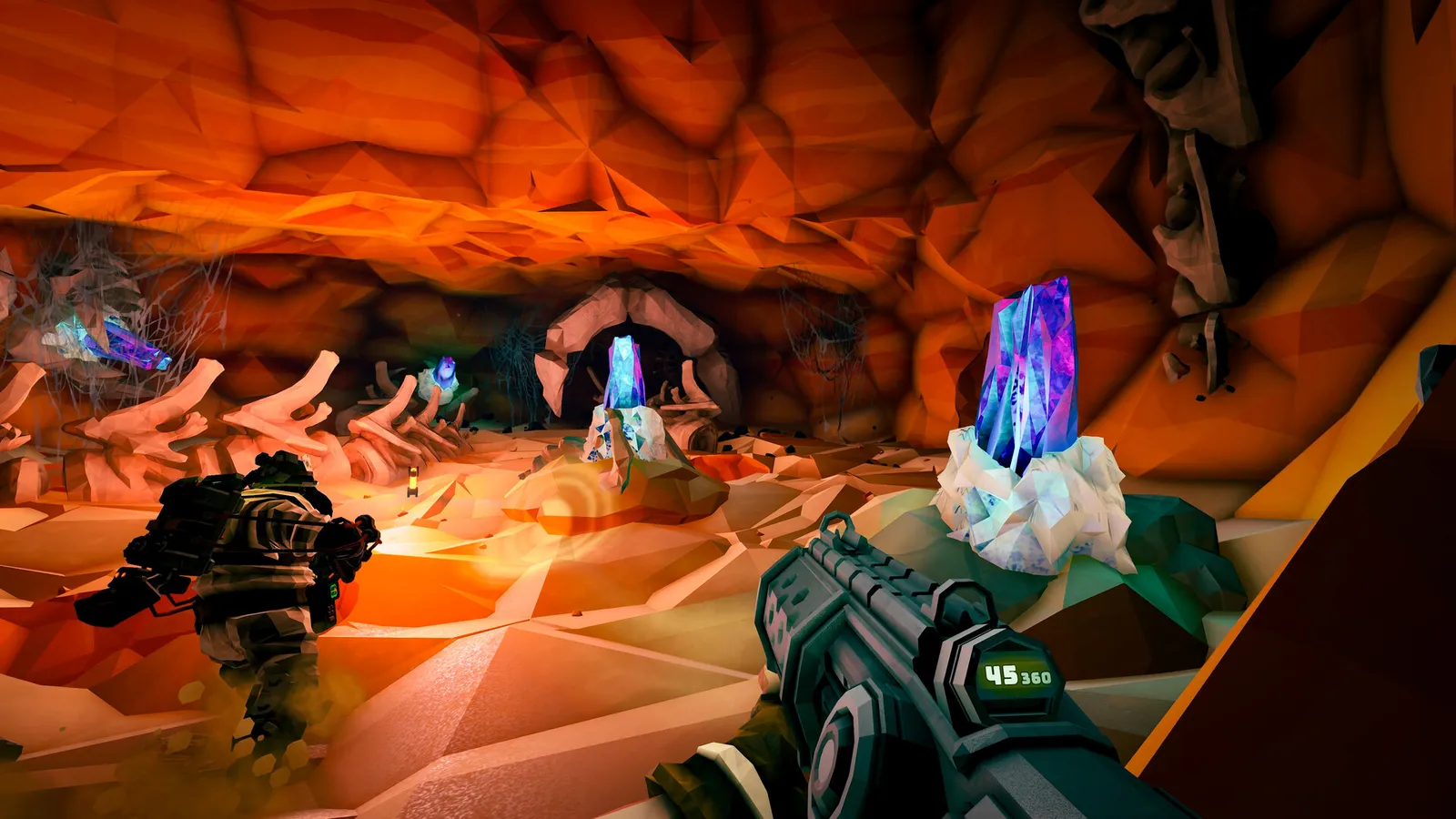
The missing equipment is often more noticeable than the missing firepower. A four-class team can bring platforms, drills, ziplines and a grappling hook on the same expedition. A duo has to work around the tools it left behind. A high mineral vein might be a quick stop for one pairing and a small excavation project for another. That improvisation is part of the appeal, provided neither of you expects every cave to be convenient.
You also have more say over the pace. There is less chance of somebody starting an objective while you are still looking around, and it is easier to notice what your partner contributes. Keep the lobby friends-only if you want to preserve that rhythm.
Check your versions before buying
This is online co-op, with no native split-screen mode. Each of you needs a separate system running the game and access to a compatible version. Two Windows PCs are not enough to guarantee compatibility: the storefront matters.
| Your versions | Can you play together? |
|---|---|
| Steam + Steam | Yes. |
| Xbox + Microsoft Store PC version | Yes; these share a multiplayer pool. |
| PS4 + PS5 | Yes; PlayStation supports cross-generation play. |
| Steam + Microsoft Store PC or Xbox | No. |
| PlayStation + PC or Xbox | No. |
These combinations refer to the original Deep Rock Galactic. Check the exact game title as well as the store when arranging your purchase.
Choose the jobs you want to share
For a first duo, we would start with Scout and Engineer if exploring is the main attraction. The Engineer places a platform beneath a high deposit; the Scout grapples onto it to mine, while the flare gun helps both players read the cavern. It creates a useful back-and-forth before combat even starts. The Engineer's sentry adds fire support, but neither player has the Gunner's protective bubble for a difficult rescue.
Gunner and Driller is our alternative if you would rather have direct ways to handle a fight and reshape your route. The Driller cuts a passage through rock while the Gunner covers the approach. A zipline can bridge a gap for both players, and the shield generator can buy breathing room. Without Scout's flare gun, large chambers take more care to read; without platforms, some deposits take more digging to reach.
Scout and Gunner can suit a pair who like moving separately within reach of each other: Scout handles lighting and distant resources, while Gunner provides sustained fire and protection. The compromise is getting safe footing for Scout and making routes the Gunner can follow. Grappling somewhere does not create a path for your teammate.
These are starting points, not required combinations. Try different pairs and notice what actually frustrates you. If most of your evening disappears into reaching awkward minerals, changing traversal tools may help more than chasing a stronger weapon setup.
One rescue partner, four supply racks
Bosco, the robot that helps a lone miner, does not accompany a two-player crew. He disappears when another player joins. You cannot use him to fill an empty slot or count on his automatic revives while your partner keeps fighting.
That makes distance a real decision. If Scout falls on a distant ledge, Gunner may first need to reach that ledge before a revive is possible. Staying close enough to help is more useful than staying shoulder to shoulder. When a rescue does go wrong, the Gunner's shield can repel many enemies and block most projectiles, but it is not invulnerability: some attacks penetrate it.
Supplies are a welcome advantage for a smaller crew. A standard resupply costs 80 Nitra and provides four racks, each restoring half of a player's ammunition capacity. Two players can budget two racks each instead of one. Take them when needed: ammunition above your maximum is wasted. Mining enough Nitra and calling a pod somewhere you can safely reach still matter.
Give your first missions room to breathe
Our recommendation is to begin on Hazard 2, or Hazard 1 if either of you is learning first-person controls. Move up when navigation, mining and using your support tools stop competing for all your attention. Hazard 3 is a reasonable next experiment, not a test you need to pass to enjoy the game.
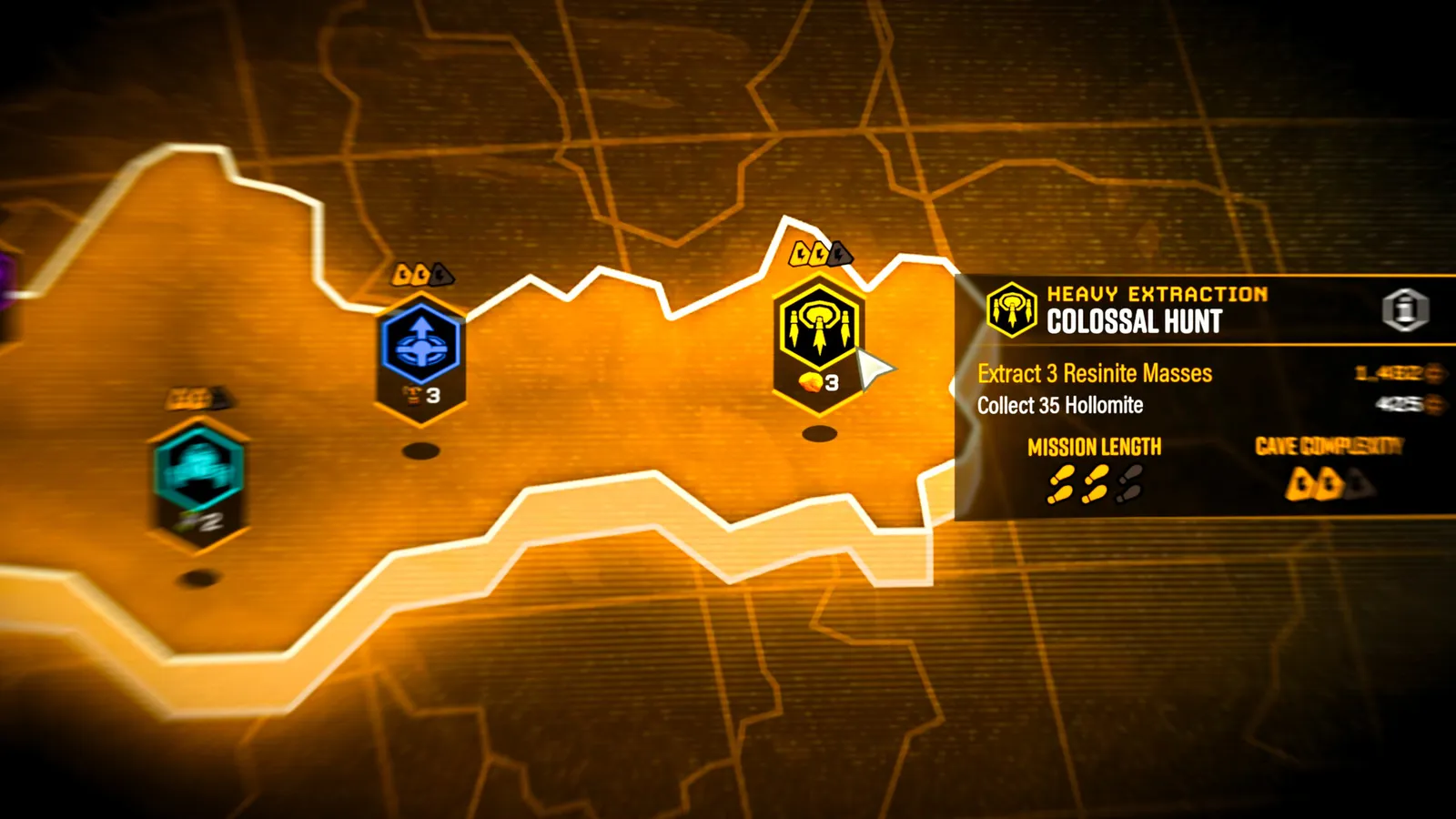
Choose a short mission with low cave complexity and avoid stacking unfamiliar warnings at first. Those choices affect how much you need to manage alongside the shooting. On an Escort Duty mission, for example, repairing the Drilldozer takes one of two players away from firing; agree who will respond when it needs attention.
Both of you progress, but check your assignments
Mission rewards are awarded to each player, rather than divided into a loot pile for you to argue over. Assignments are tracked individually, though: a shared mission advances an assignment only if it is the specific mission that player needs. Check both markers before launching, especially if one of you has played ahead.
Failure gives reduced rewards rather than wiping your established character progress, but it does not count as completing the assignment. If both dwarves are incapacitated with no way to revive, the mission ends. A bad attempt costs time and the chance of a full payout; it is a reason to adjust the next mission, not to restart your whole progression.
Who should make it their regular duo game?
We would recommend it to two people who enjoy learning a job together: finding a route, making a platform useful, covering a repair and getting out when the cave becomes dangerous. Lower Hazard levels give you space to learn, but aiming, movement and finding your way through dark, vertical caves remain part of the experience.
If your ideal evening centres on fighting waves together, our selection of co-op horde shooters is a useful place to compare options. Deep Rock Galactic makes particular sense when the work between those fights sounds enjoyable too.
You do not need to wait for a full squad. Pick compatible versions, start with a forgiving mission and choose two classes whose tools you want to learn. The moment one of you makes a route that the other can actually use is a good measure of whether this is your kind of co-op.